


 Back
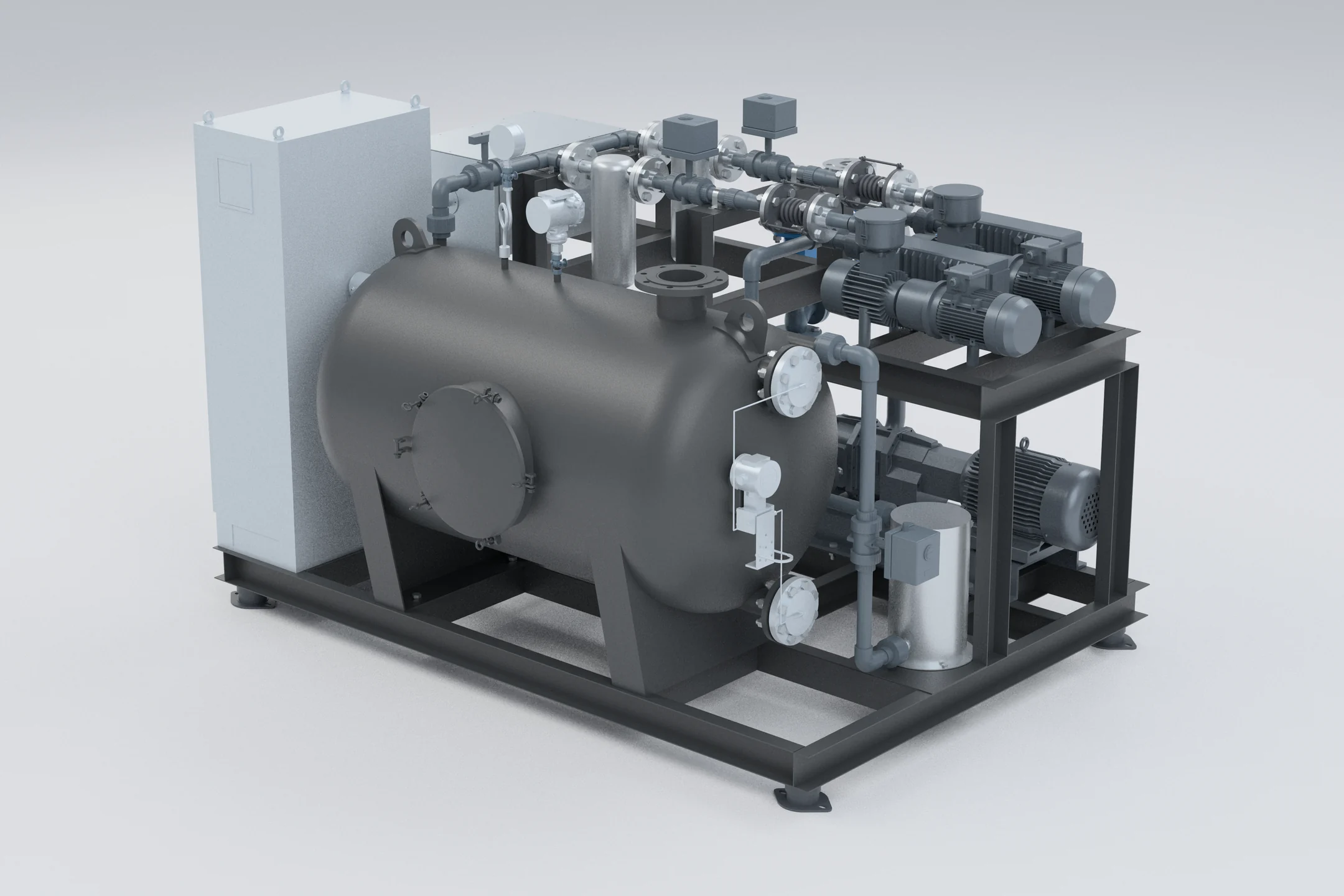
Vacuum Sewage Pump Station
A sealed collection network uses vacuum to draw wastewater from dispersed sources to a central pump station for onward discharge. It serves villages, visitor sites and retrofits where gravity drainage routes are constrained.
3D explorer
Interactive 3D assembly
Rotate, zoom and separate the assembly in stages. Select a subsystem to inspect how valves, seals and fasteners fit together. Open in a separate window
From dispersed sources to a single discharge point
Generate vacuum
The vacuum pumps remove air to establish and maintain the operating vacuum in the collection network.
Convey wastewater
When an upstream interface valve opens, the pressure difference draws wastewater into the sealed vacuum main and toward the station.
Collect and separate
The horizontal vacuum tank holds the incoming wastewater. Gas-liquid separation limits liquid carryover into the vacuum pumps.
Pump to discharge
When the tank reaches the set level, a sewage pump transfers the collected wastewater to the downstream connection.
One assembly with two operating circuits
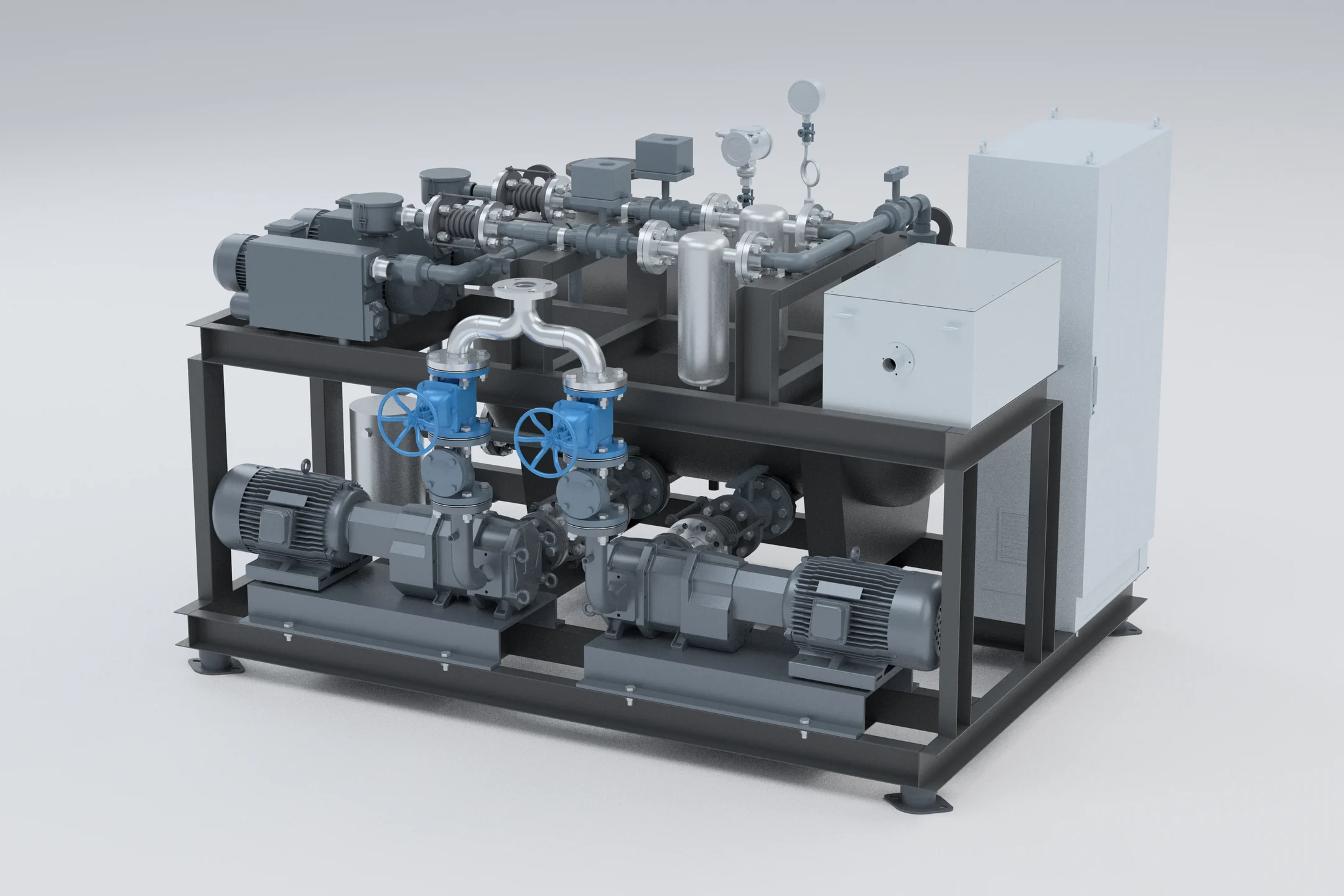
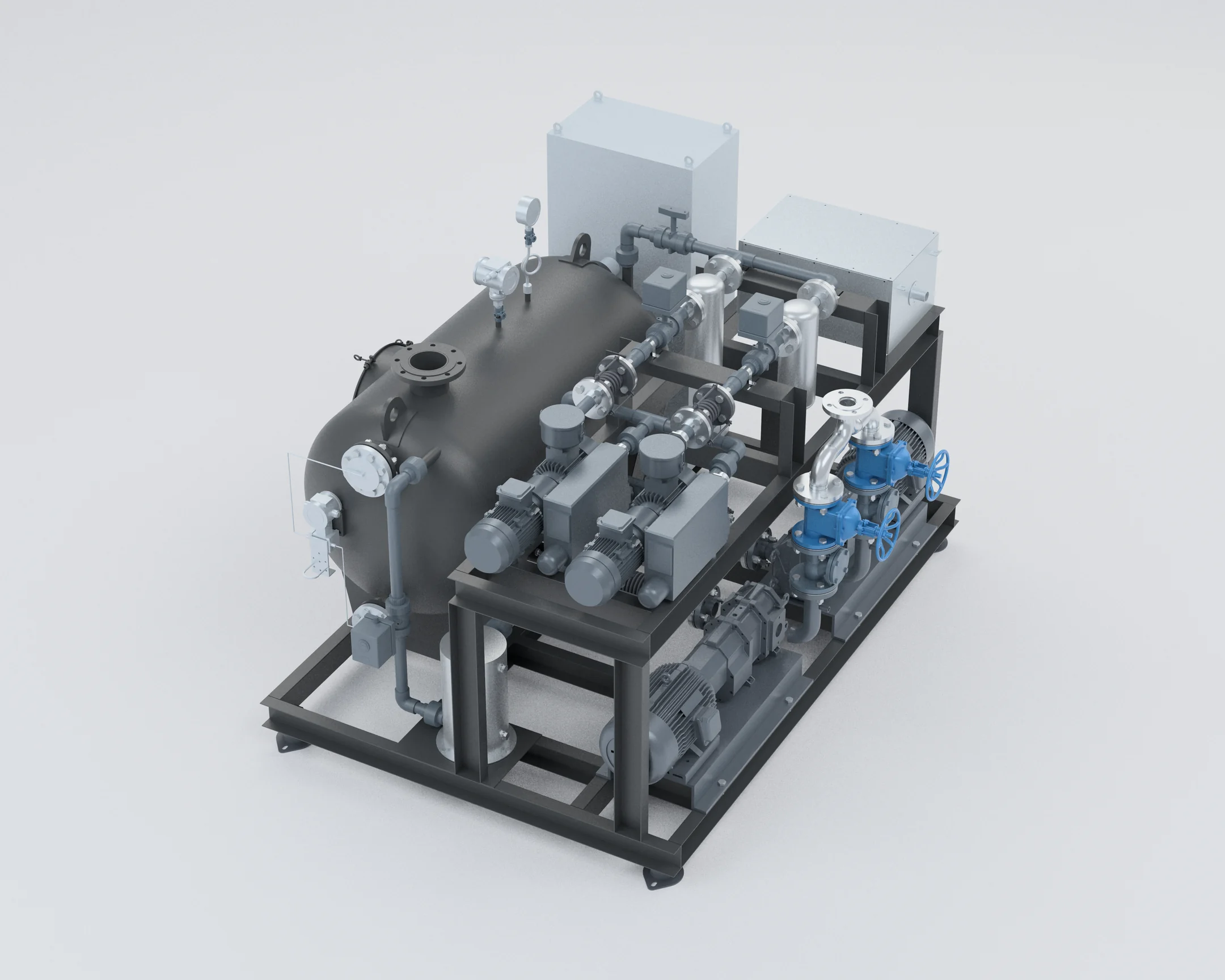
The vacuum circuit maintains negative pressure. The discharge circuit moves wastewater. The control cabinet coordinates both pump groups using vacuum and level signals.
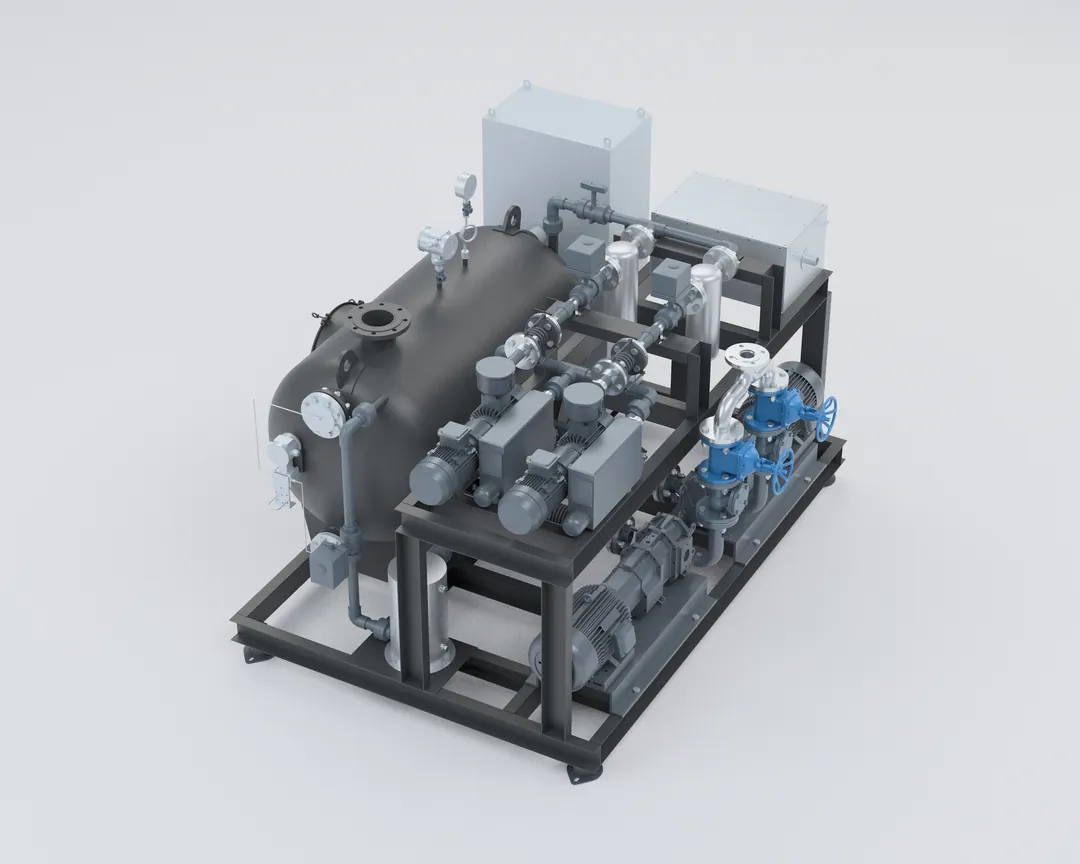
- Horizontal vacuum tank
- Receives and temporarily stores incoming wastewater, with space for gas and liquid to separate.
- Vacuum pumps and separators
- Maintain vacuum in the collection network and separate liquid carried in the extracted air.
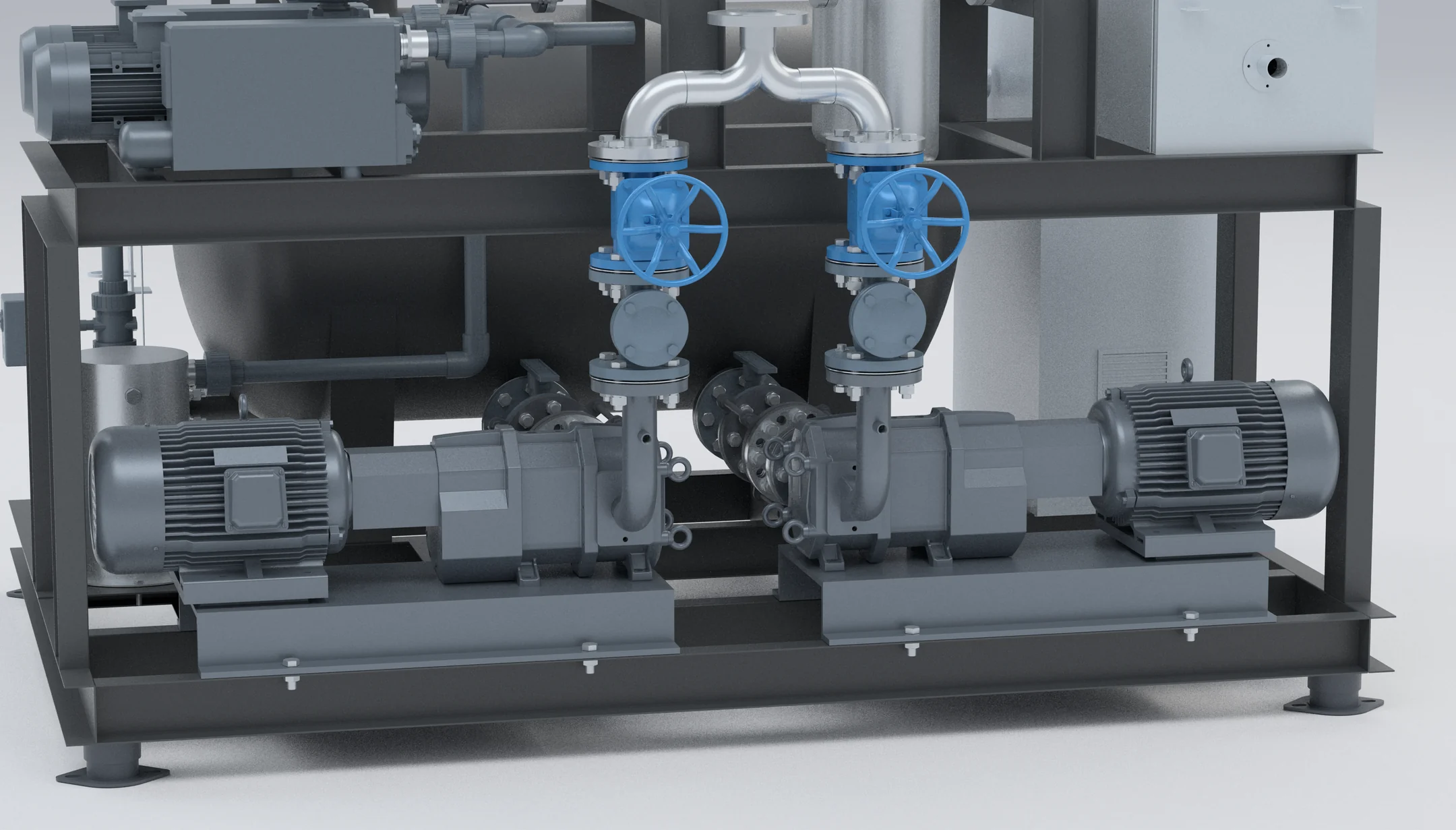
- Two rotary lobe sewage pumps
- Lift wastewater from the tank to the downstream pipe. Duty and standby arrangements depend on the project.
- Instruments and control cabinet
- Read vacuum and level signals and manage pump starting, stopping, alternation and alarms.
Sites with limited room for gravity drainage
- Villages and dispersed facilities
- Connect separate domestic wastewater sources to a central collection system.
- Visitor sites and public restrooms
- Serve multiple discharge points along visitor routes through a sealed collection network.
- Urban retrofits and high groundwater
- Evaluate a shallow pipe route where underground services are crowded or deep excavation is constrained.
Discuss your project
Share the number of discharge points, peak wastewater flow, pipe route and discharge elevation. We use these inputs to size the tank, select the pumps and assess aboveground or buried installation.